Il giorno successivo, l'incidente sarebbe stato dimenticato se non fosse stato per quello che accadde durante la sua lezione pomeridiana.
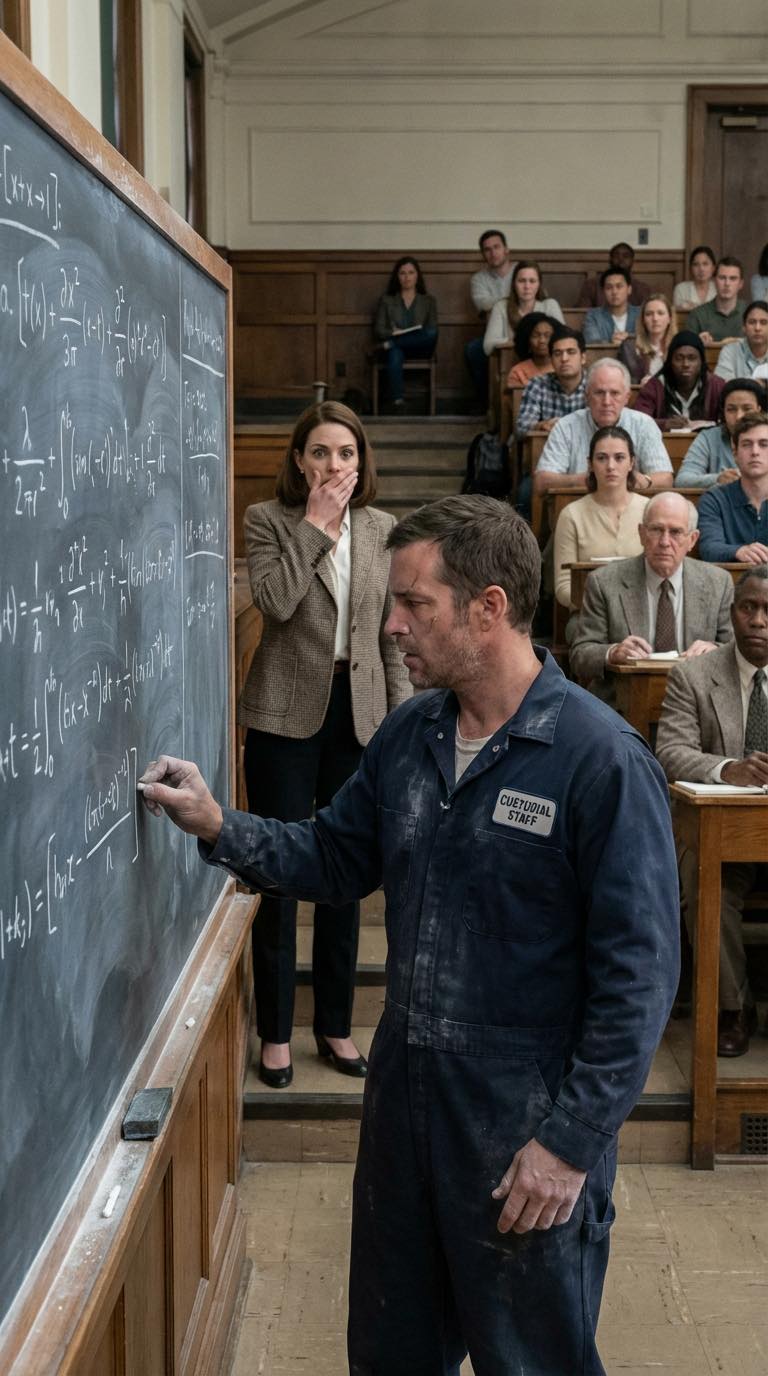
Daniel entrò a metà della lezione, muovendosi con cautela lungo il lato della stanza mentre svuotava i cestini con disinvoltura. Vivian continuò a parlare, sebbene la sua concentrazione non fosse acuta come al solito. Riusciva a percepire l'interruzione ancor prima che avvenisse.
E poi accadde.
«Quarta linea», disse Daniel, quasi sottovoce. «Il segno dovrebbe essere negativo.»
Le parole rimasero sospese nell'aria.
Vivian si immobilizzò.
Lentamente, tornò a guardare la lavagna, i suoi occhi che seguivano l'equazione. Per un attimo, si disse che si sbagliava, che si trattava di un malinteso, di una coincidenza, di qualsiasi cosa tranne ciò che sembrava.
Ma più a lungo guardava, più la cosa si faceva chiara.
Aveva ragione.
Un piccolo errore. Facile da trascurare. Ma sufficientemente significativo da cambiare il risultato.
Prima che potesse rispondere, una delle sue migliori studentesse prese la parola, con la voce rotta dall'incredulità.
“Ha ragione, professore.”
La stanza cambiò di nuovo, questa volta in modo più evidente. La curiosità sostituì il disagio. Le teste si voltarono, l'attenzione si fece più acuta.
Vivian corresse l'errore in silenzio, con movimenti controllati ma decisi. Quando ebbe finito, si rivolse di nuovo a Daniel, con un'espressione indecifrabile.
«Se sei così sicuro di te», disse, con un tono di voce ora tagliente, «forse ti piacerebbe risolvere il problema di ieri. Per bene. Davanti a tutti.»
Nella stanza si udì un mormorio.
Daniel non rispose subito. Rimase lì immobile, con una mano ancora appoggiata al carrello, come se stesse valutando qualcosa di ben più complesso della sfida stessa.
«Dammi qualche giorno», disse infine.
Vivian inclinò leggermente la testa. «Una settimana», rispose. «La renderemo interessante.»
E così, all'improvviso, quello che era stato un momento fugace si trasformò in qualcosa di completamente diverso.
La notizia si è diffusa più velocemente di quanto chiunque si aspettasse. Nel giro di poche ore, gli studenti ne parlavano nei corridoi, nelle stanze del dormitorio, sui social media. Alla fine della settimana, non era più solo una voce, ma un vero e proprio evento.
Ciò che nessuno sapeva, e che Vivian certamente ignorava, era chi fosse veramente Daniel Reyes.
Anni prima, il suo nome era circolato in contesti molto diversi. Riviste accademiche. Panel di convegni. Conversazioni discrete tra matematici che riconoscevano qualcosa di raro quando lo vedevano. Daniel era una di quelle menti rare: il tipo di persona che non si limita a comprendere la matematica, ma la rimodella, che vede schemi dove altri vedono caos.
Ma la vita, come spesso accade, aveva interrotto quella traiettoria.
His younger sister, Sofia, had been diagnosed with a degenerative illness that required constant care, expensive treatments, and time—more time than any academic career could reasonably allow. Daniel had made a choice that, at the time, didn’t feel like a sacrifice. He left his research, declined offers, and stepped away from a future that had been all but guaranteed.
For years, his world narrowed to hospital rooms, medical bills, and the quiet, exhausting routine of caregiving. And when Sofia eventually passed, the version of himself that had once thrived in lecture halls felt distant, almost irrelevant.
He didn’t disappear entirely.
He just… stepped aside.
The custodial job at Halberg wasn’t part of some grand plan. It was practical, steady, and, perhaps most importantly, invisible. No expectations. No pressure. Just work.
Until Vivian Caldwell handed him a reason to step back into the light.
The night before the scheduled demonstration, Daniel sat alone in an empty classroom, a piece of chalk resting between his fingers. The equation filled the board, as intimidating as ever, but he wasn’t intimidated.
He was remembering.
The rhythm of it. The quiet satisfaction of solving something that didn’t want to be solved. The way ideas connected, unfolded, revealed themselves when given enough patience.
By the time he stepped away, the solution was complete.
Elegant. Precise. Undeniable.
The next morning, the lecture hall was packed beyond capacity. Students filled every seat, lined the walls, crowded near the doors. Faculty members stood at the back, arms crossed, expressions ranging from skeptical to curious.
Vivian stood at the front, composed as ever, though something beneath the surface had shifted. She wouldn’t have admitted it, but she was nervous—not of being proven wrong, but of not understanding why this situation unsettled her as much as it did.
When Daniel entered, the room quieted almost instantly.
He walked to the board without rushing, without hesitation, and picked up the chalk.
For a moment, he simply looked at the equation.
Then he began.
What followed wasn’t just a solution—it was a process, a demonstration of thinking that felt almost… effortless. He moved through the steps with clarity, occasionally pausing to adjust, to refine, to make something complex feel, if not simple, then at least understandable.
Time seemed to compress.
When he finished, the board was filled, the proof complete.
And the room was silent.
See more on the next page
Advertisement